Natural Latex vs Memory Foam: Which Pillow Material Is Better?
Natural Latex vs Memory Foam: Which Is Better for Sleep?
A lot of people think pillow shopping is about softness. Or firmness. Or whatever felt nice for thirty seconds in a store.
Then they actually sleep on it for a week and wake up with a stiff neck, a hot face, or that low-grade irritation that comes from flipping your pillow over three times a night.
That’s when the material starts to matter.
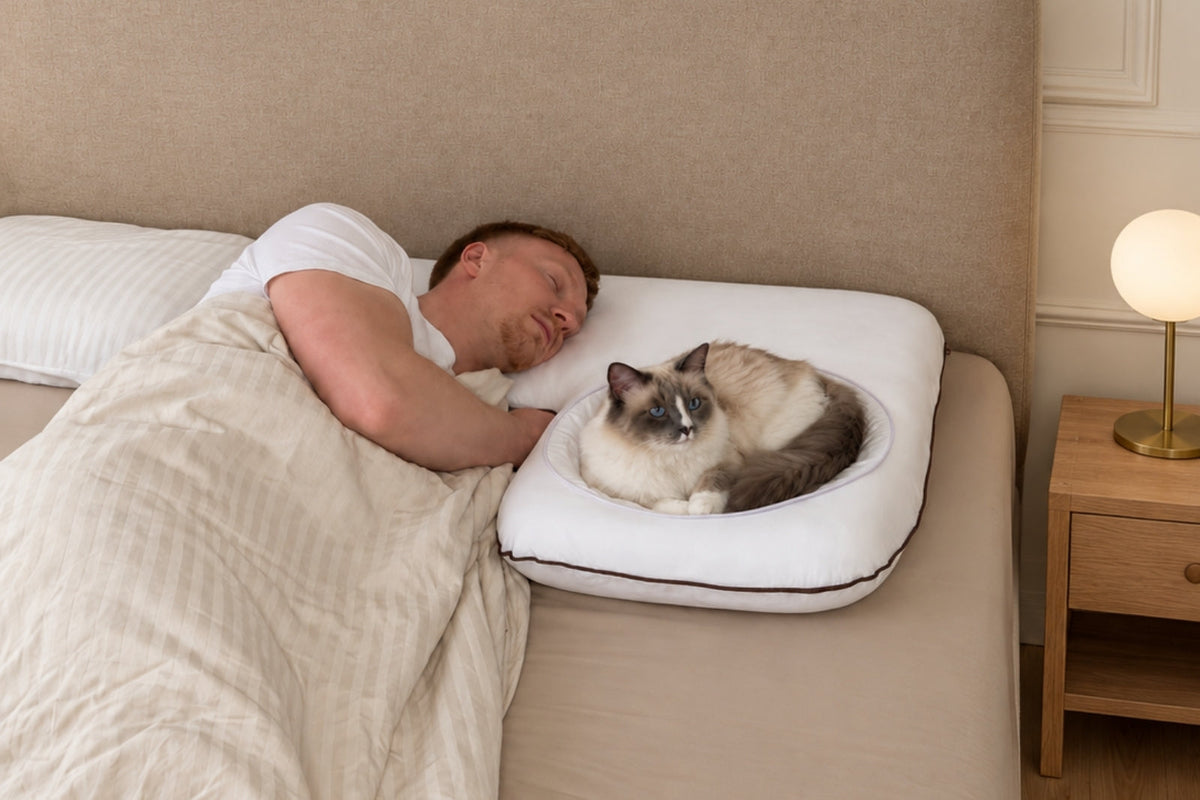
And if you sleep with a cat, it matters even more. A pillow isn’t just dealing with your weight and movement anymore. It’s dealing with a second little body showing up, shifting around, settling near your head, and changing the whole setup.
So the real question is this: natural latex vs memory foam — which one actually sleeps better?
Quick Answer: Latex vs Memory Foam
In most cases, natural latex is the better pillow material for sleep. It tends to stay cooler, respond faster when you move, and hold its shape more reliably through the night. Memory foam can feel soft and cozy at first, but it often sleeps warmer and tends to sink more under pressure.
If you like a slow, contouring feel, memory foam may still appeal to you. But if you care about breathability, support, and stability, latex usually comes out ahead.
Why Pillow Material Matters More Than People Realize
Most people focus on the obvious stuff first: height, softness, price, maybe whether the cover feels nice.
What actually affects your sleep, though, is how the material behaves once you’ve been on it for hours.
Does it hold you in place too much? Does it get hot? Does it spring back when you move, or does it lag behind? Does it still support your neck at 3 a.m., not just at bedtime?
That’s the real test.
And it becomes even more obvious if you move around in your sleep, share a bed, or sleep with a cat who likes to wedge themselves somewhere near your pillow.
Memory Foam: Comfortable, But Not Always Great All Night
Memory foam is popular for a reason. It can feel immediately comfortable. It molds around your head, softens under pressure, and gives that sink-in feeling a lot of people associate with comfort.
But that same quality is also where the problems usually start.
Pros of Memory Foam
Memory foam does have some genuine strengths.
It feels soft and contouring right away. It’s easy to find, available at almost every price point, and for some people it feels excellent at first contact. If you like that hugged, cushioned feeling, memory foam often delivers it.
That’s why it wins a lot of first impressions.
Cons of Memory Foam
The issue is what happens later, once you’ve been lying on it for hours.
1. It Often Sleeps Hot
This is probably the most common complaint.
Memory foam tends to retain heat more than more breathable materials. Some newer versions try to improve this, but in real life, a lot of people still find it warmer than they want, especially through the middle of the night.
And once a pillow gets too warm, sleep gets choppier. You shift more. You flip it. You try to find the cool side. It adds up.
2. It Has That Slow, Sinking Feel
Some people love this. Some people absolutely do not.
Memory foam reacts more slowly to movement, so when you change position, it can feel like the pillow is catching up after you. That creates a kind of dragging, stuck-in-place sensation that not everyone enjoys.
If you move around at night, or if your cat does, that lag can get annoying faster than you’d think.
3. It Tends to Lose Shape Over Time
Not every memory foam pillow breaks down quickly, but many lose consistency as they age. They can develop soft spots, flatten unevenly, or just stop feeling supportive in the way they did at first.
That matters if you’re relying on the pillow for neck alignment and not just surface comfort.
4. It Can Make Movement More Noticeable
This becomes especially relevant if you don’t sleep alone.
When a cat climbs onto a memory foam pillow, shifts their weight, then changes position again, the surface can feel less stable than you want. Even small changes can affect how supported you feel.
So while memory foam can feel lovely at first, it doesn’t always hold up as well in a more dynamic sleep setup.
Natural Latex: Supportive Without Feeling Stiff
Latex feels different right away.
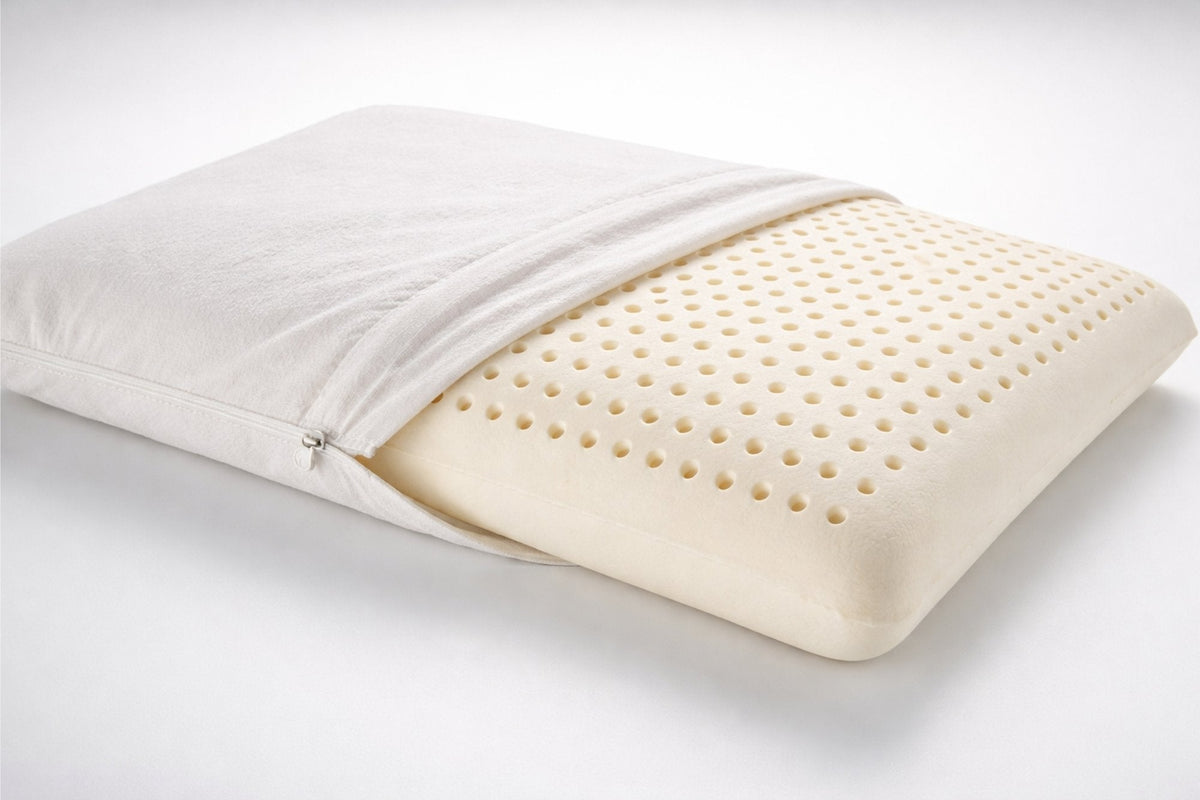
Instead of slowly sinking under you, it has a more buoyant, responsive feel. It supports without swallowing you. For a lot of people, that means it feels a little more alive, a little less sleepy-soft at first, but much better after a full night.
That difference is hard to appreciate until you’ve actually slept on both.
Key Advantages of Natural Latex
1. It Responds Right Away
This is one of the biggest differences.
Latex adjusts quickly when you move. You turn your head, shift your shoulder, or change position, and the pillow responds almost immediately. It doesn’t hang onto the shape you were in five seconds ago.
That makes it feel easier to move on, and easier to stay comfortable while moving.
2. It’s Usually More Breathable
Natural latex generally allows for better airflow than traditional memory foam. That doesn’t mean it sleeps ice-cold. It’s still a pillow. But it often feels noticeably less heat-trapping.
If you tend to sleep warm, this matters. If you sleep warm and have a cat pressed against you, it matters even more.
3. It Holds Its Shape Better
A good latex pillow tends to stay more consistent through the night.
That means better support, less collapse, and a more stable surface overall. For neck support, that consistency is a big deal. A pillow that starts supportive and then gives up halfway through the night isn’t doing much for you.
Latex is usually better at staying like itself.
4. It’s More Durable
This is one of the less flashy advantages, but it matters.
Natural latex usually holds up better over time than many memory foam pillows. It tends to resist flattening and breakdown more effectively, which makes the higher upfront cost easier to justify if you’re thinking long-term.
It’s not just about lasting longer. It’s about sleeping the same way for longer.
5. It Works Better in Shared Sleep Setups
This is the underrated part.
If you sleep with a partner, a child, or a cat who regularly ends up near your head, latex tends to handle that kind of movement better. The surface stays more stable. It doesn’t cave in the same way. It’s easier for both sleepers to settle without constantly affecting each other.
That’s a real advantage, especially if your cat has a habit of creeping onto your pillow.

Why Latex Is Better for Sleeping With Your Cat
Cats like warmth, yes. But they also like stability.
If the surface under them shifts too much, gets too hot, or sinks every time they move, they’re more likely to keep adjusting. And when they keep adjusting, there’s a good chance you wake up too.
This is where latex tends to work better.
It stays more stable. It breathes better. It doesn’t trap your cat’s body heat the same way softer foam often does. And because it responds quickly, the whole setup feels less disrupted when your cat changes position in the night.
That doesn’t make latex magical. Your cat is still a cat. But it does make the bed feel more predictable, which is half the battle.
The Missing Link: Structure + Material
Material matters, but material alone doesn’t solve everything.
A pillow can be made from a great material and still be wrong for the way you sleep. Especially if you’re sharing that sleep space with a cat who likes to settle near your head or drift onto your pillow.
That’s where structure comes in.
You need the material to stay supportive, yes. But you also need the shape and setup to make sense. Some kind of clear sleeping space. Some stability across the surface. Something that helps your cat settle nearby without slowly taking over the exact place your neck is supposed to be.
That combination is what actually changes the experience.
So What’s the Best Option?
If you want the simpler answer, here it is: for most people, natural latex is the better choice.
Especially if you sleep warm, need consistent support, or sleep with a cat that turns your pillow into shared territory.
Memory foam can still work for some sleepers. There are people who genuinely love that deep, slow contouring feel. But if your goal is better airflow, steadier support, and less disruption through the night, latex usually makes more sense.
Where Most People Go Wrong
They buy the pillow that feels nicest for five minutes.
That sounds harsh, but it’s true.
Memory foam often feels impressive right away because it’s soft and dramatic. It molds around you. It feels plush. In a quick tryout, that can be convincing.
Latex is usually less flashy. It doesn’t make the same first impression. But over a full night, and especially over months of use, it tends to perform better in the ways that actually matter.
So yes, memory foam can win the showroom test.
Latex often wins real sleep.
The Practical Solution
When you combine a supportive material with a setup that actually accounts for how you sleep, things get better pretty quickly.
That’s part of the thinking behind products like the Pawenza Solace Pillow. It uses more stable, supportive materials to create a sleep setup that works better not just for you, but for the reality that your cat is probably going to end up near your head at some point anyway.
That kind of product only makes sense if it solves a real problem. In this case, it does: too much movement, not enough structure, and a pillow that was never designed for shared sleep in the first place.
FAQ: Latex vs Memory Foam
Is latex better than memory foam for pillows?
For many people, yes. Latex tends to be better for breathability, responsiveness, and long-term support.
Does memory foam get too hot?
It can. A lot of people find memory foam warmer than they’d like, especially during longer sleep periods.
Is latex good for neck support?
Yes. Latex usually holds its shape well and provides more consistent support through the night.
Which pillow is best if I sleep with my cat?
A pillow with stable, supportive material and a bit of structure tends to work best. Latex is often a better fit than memory foam in that kind of setup.
Final Thoughts
Choosing between latex and memory foam isn’t just about preference. Not really.
It affects how supported you feel, how often you wake up, how hot you get, and whether your pillow still feels good after a few hours instead of just a few minutes.
And if you sleep with your cat, the difference gets harder to ignore. A less stable pillow becomes a problem faster when there’s a second sleeper involved, even a small one.
For most people, natural latex is the better long-term choice. It’s more breathable, more supportive, and usually more dependable night after night.
Which is what you want from a pillow in the first place.